If you can read it,
we made it.
I led our push into AI production at SimplePractice. The rule I run it by is simple: the model can make the picture, but every element a viewer is asked to trust — every piece of product UI, every caption, every number on screen — gets built by hand and composited in.
The AI reel
A minute of the AI work — both films and the dialogue swap, cut together.
FutureVideo — a 2028 vision
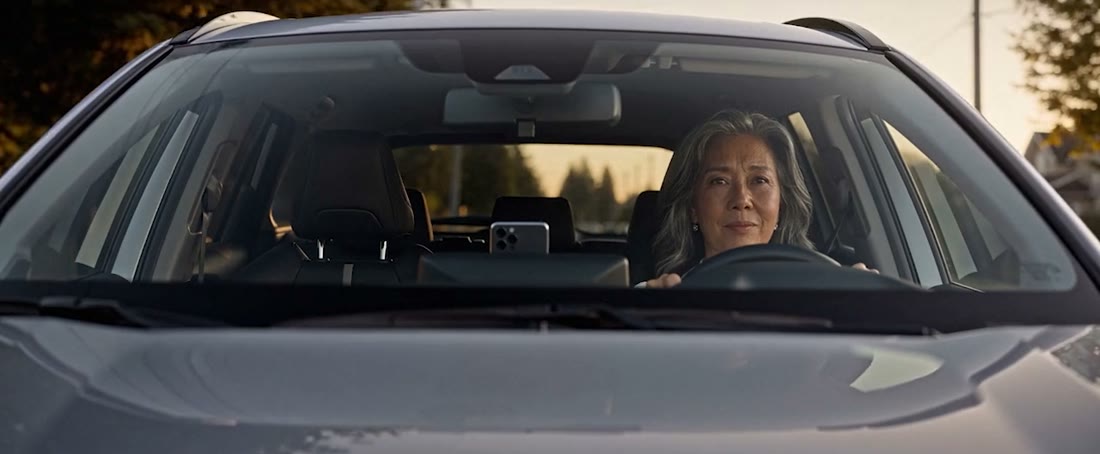
A near-future film: what independent mental-health practice could look like when the platform does the administrative work. It opens on clinicians buried in paperwork, introduces the assistant, and then plays out five vignettes of a working day — the drive in, client matching, a telehealth session, an evening at home, the practice dashboard.
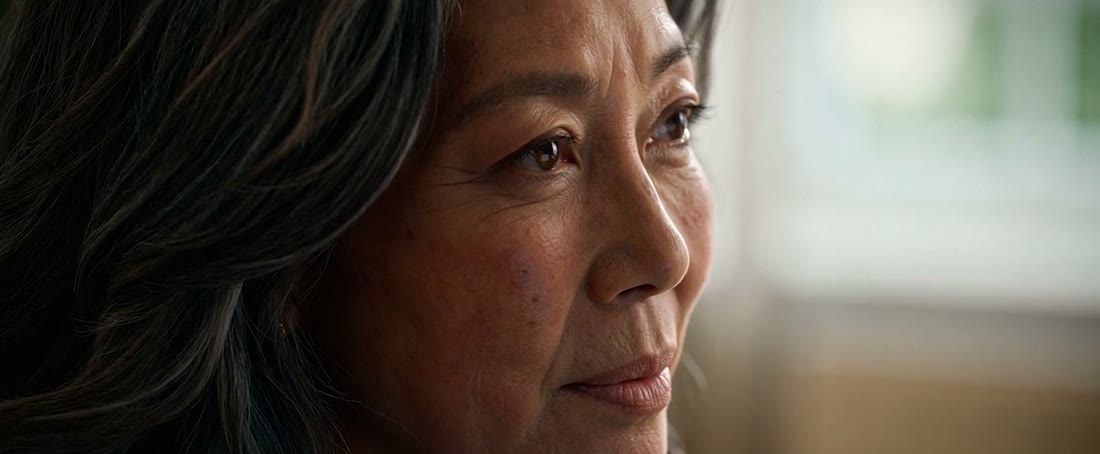
It ends on an extreme close-up of a clinician’s eyes in sunset light. That is the last frame of the film on purpose: an AI film that lands on a human being.
The film discloses itself. The endcard carries the line “This video was generated with AI” — it shipped that way, with brand approval, rather than quietly.
That was the argument I made internally and it is the one I would make anywhere: labelling the work costs nothing and it is the only version of this that survives contact with a sceptical audience.
It arrived as five paragraphs
Leadership came to our team with a vision, not a brief — four or five paragraphs on where the company is going and which capabilities had to be in it. No script, no shot list, no references. Everything past that paragraph was ours.
So I built the thing that makes a vision arguable: a treatment, a tone, a character bible, and every act boarded — before a single frame was generated. This is the deck I took into the room.
AI handles the volume. Humans handle the care.
From the deck
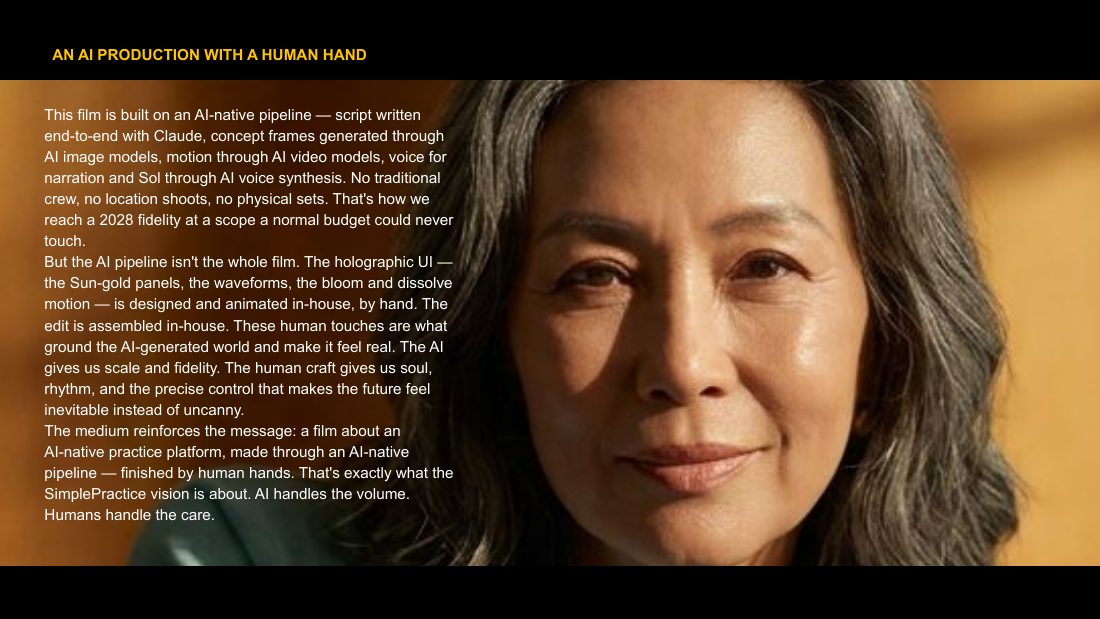
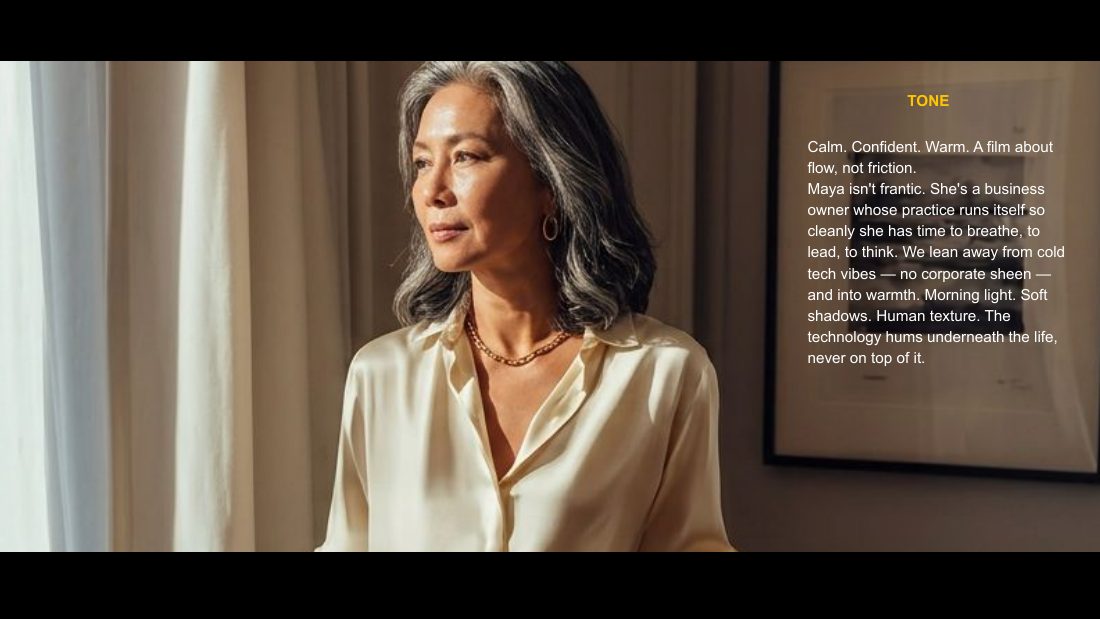
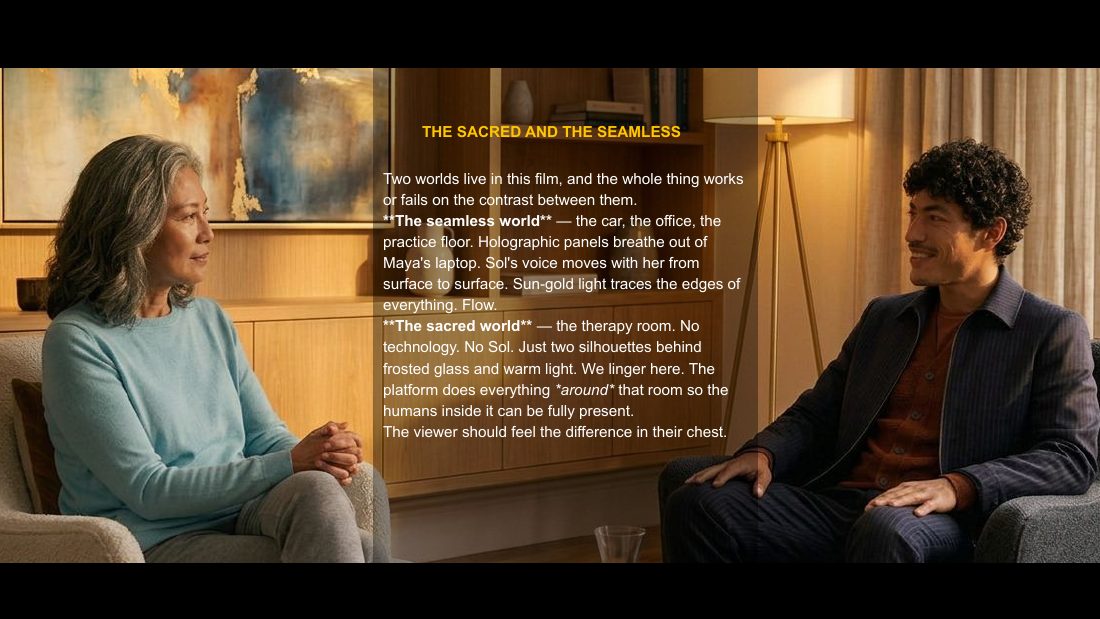
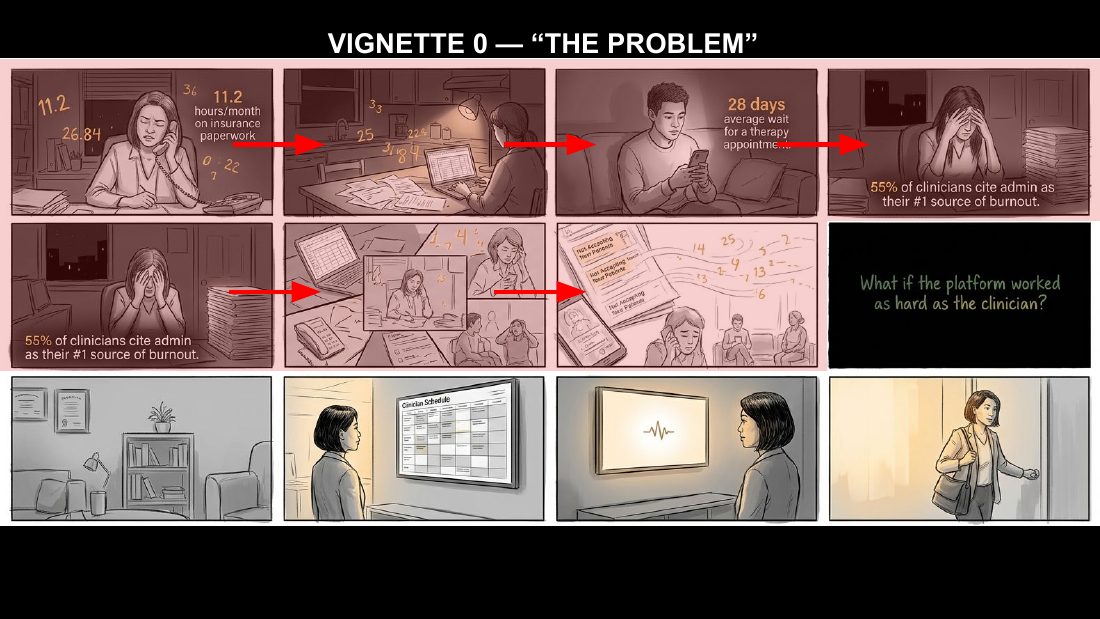
Every act, boarded first
A problem, four acts and a close. Boarding it is what turned a paragraph of strategy into something a room could agree on.
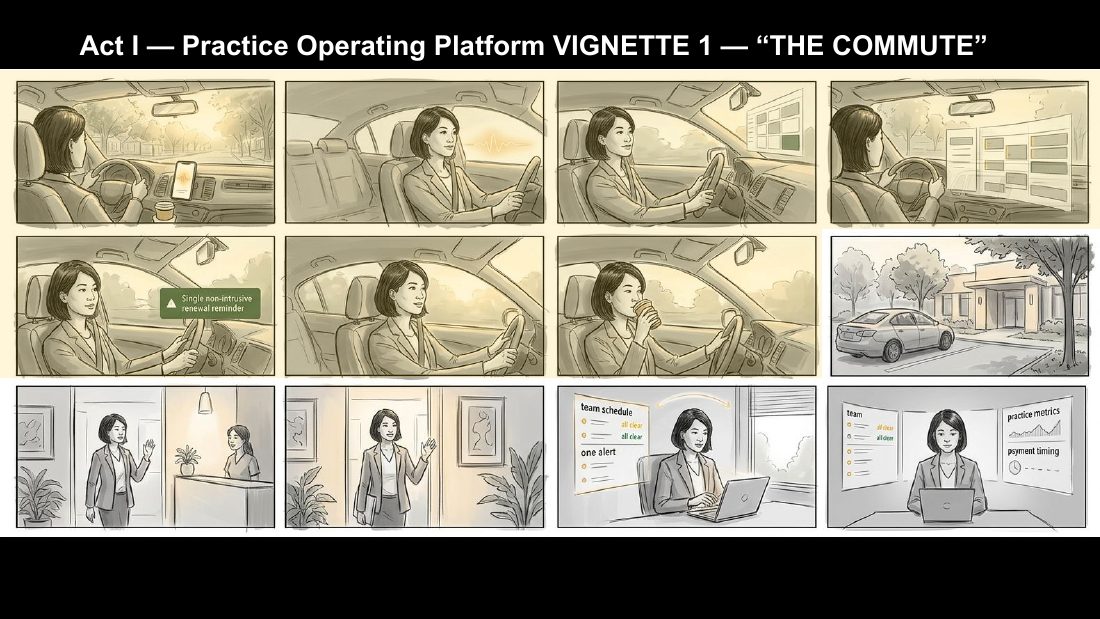
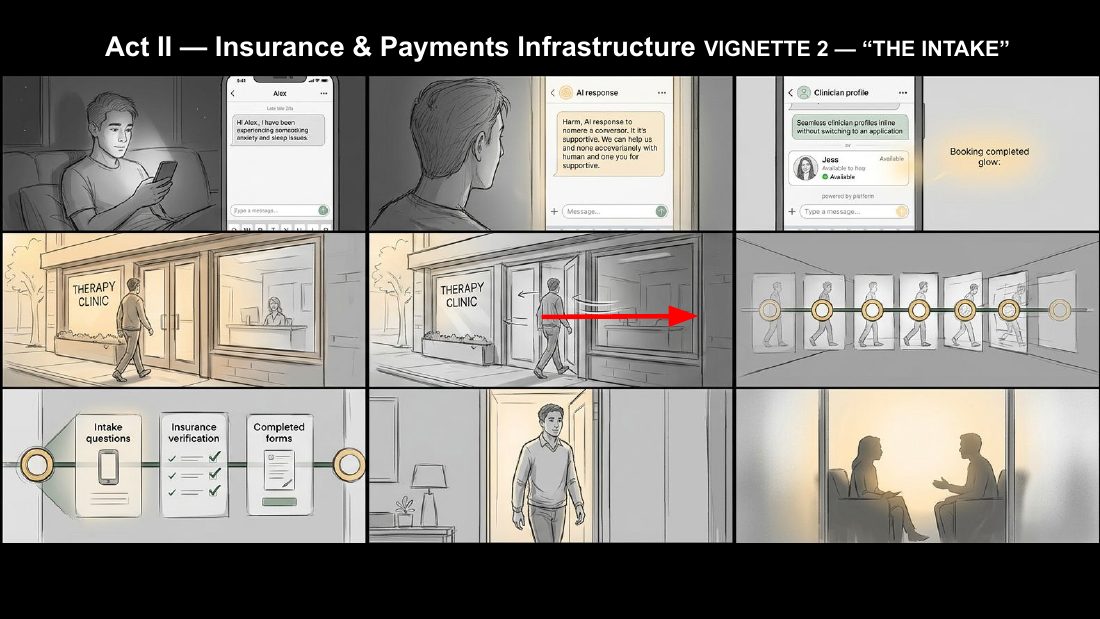
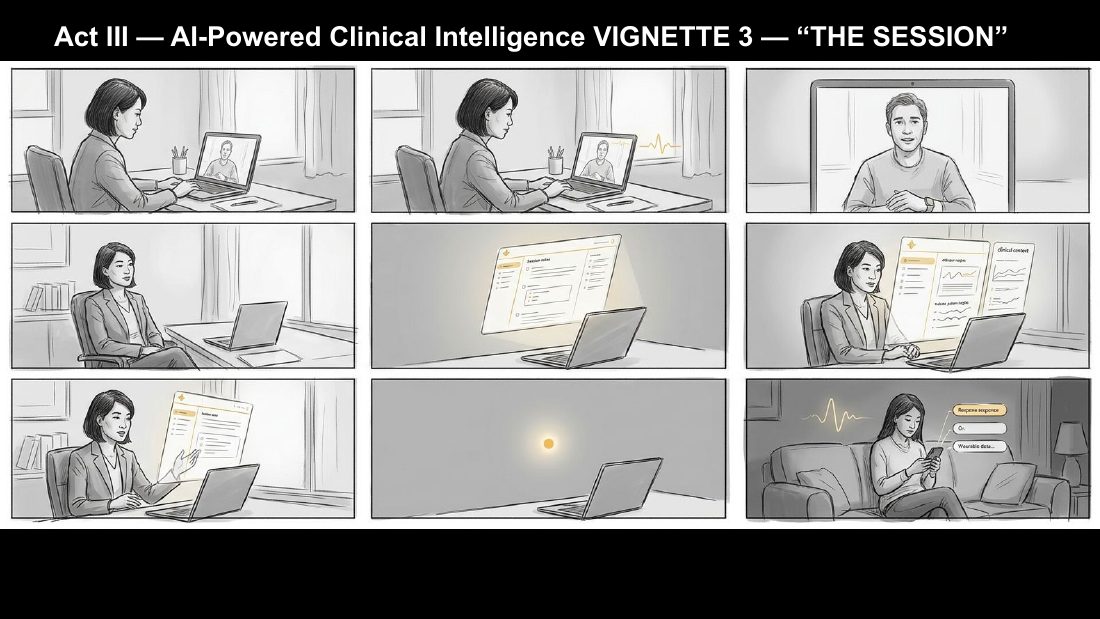
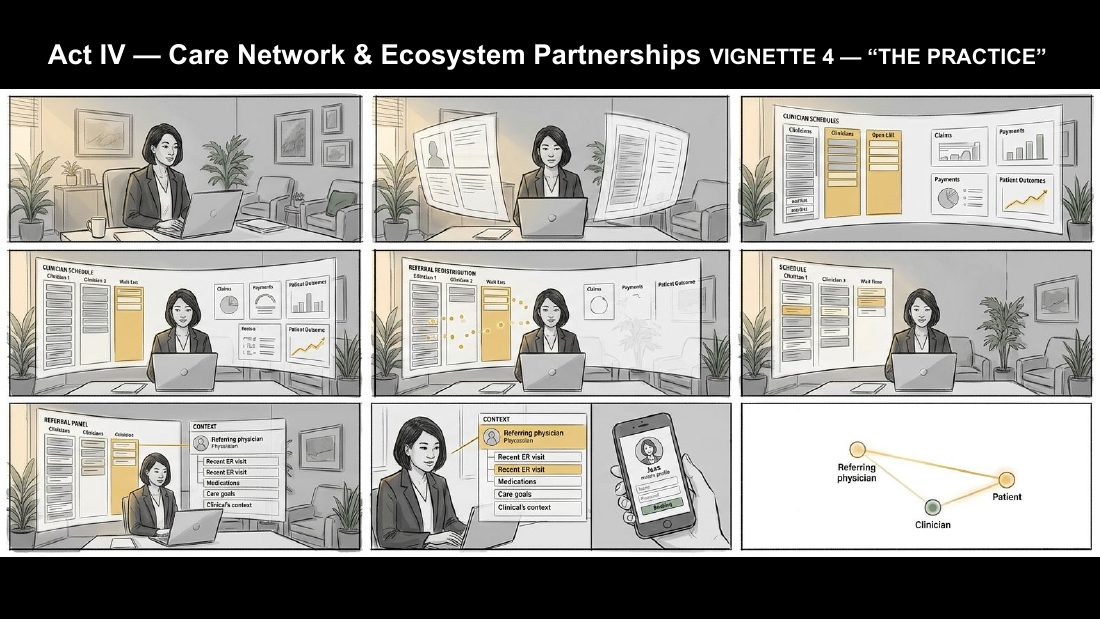
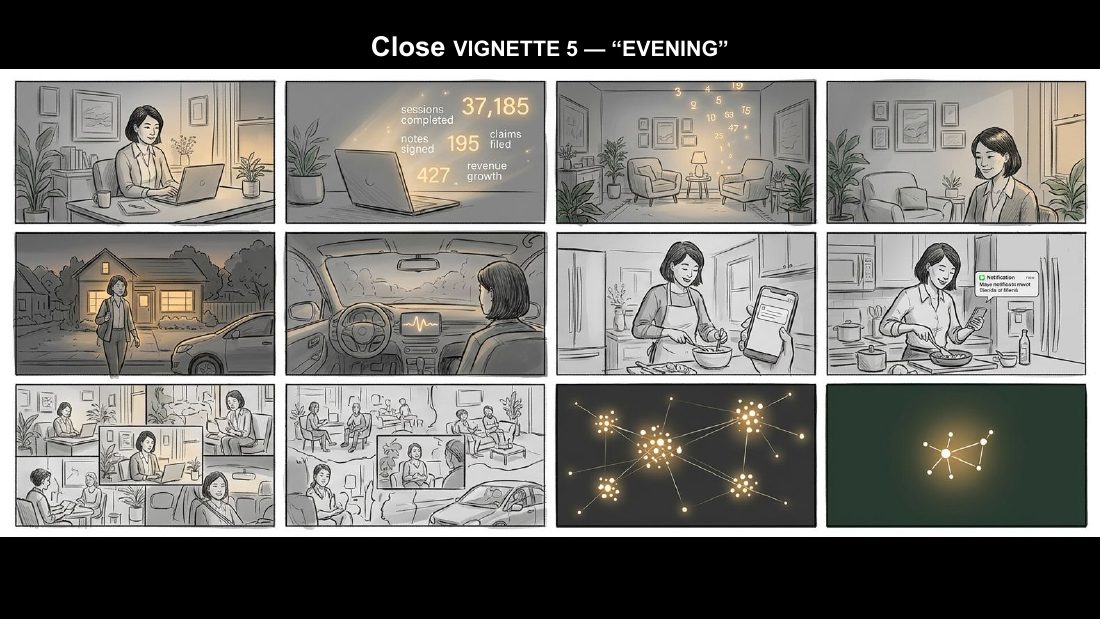
Boarded, then shipped
The board asks for one quiet renewal reminder and nothing else — the whole point of the scene is that the platform does not shout. Here is that panel, and the frame it became.
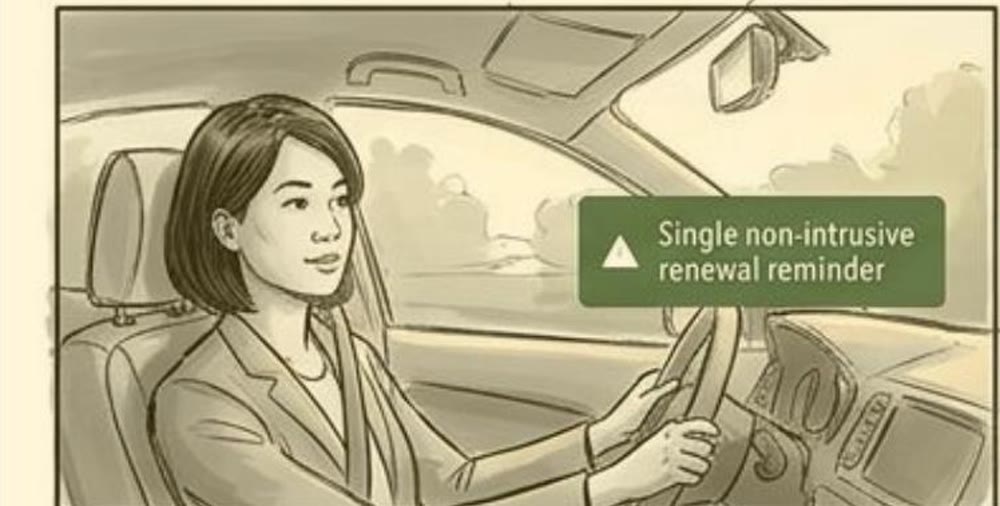
The panel as drawn
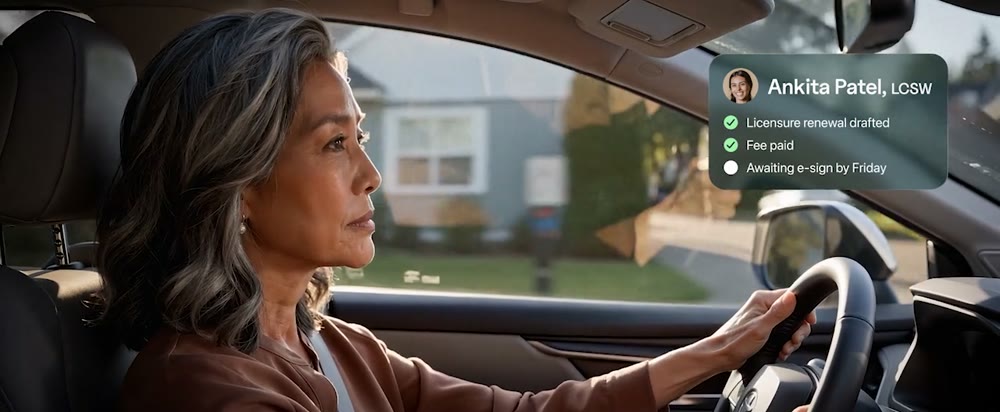
Generated plate, hand-built card
What the model made, and what we made
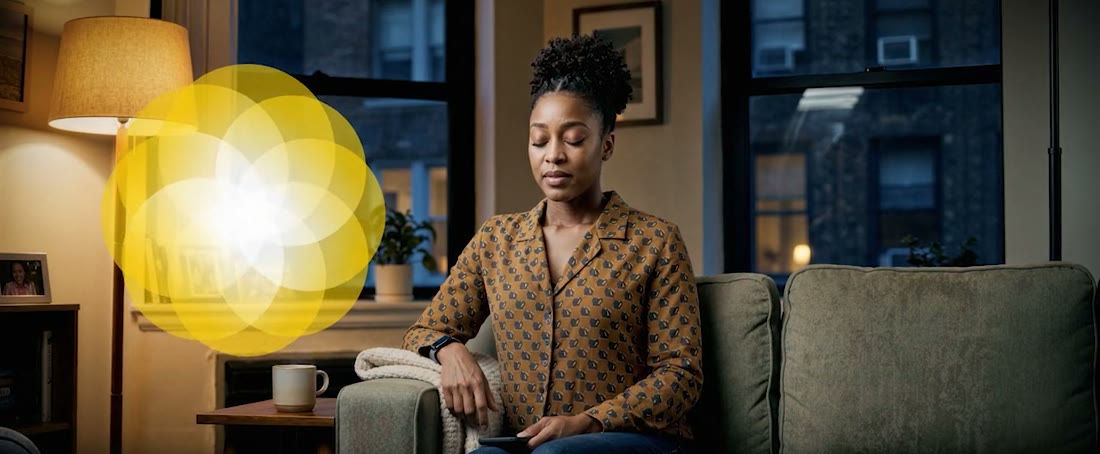
Worth being precise about, because the split is the whole job. A generated plate is a starting point with a known weakness: it invents text. Signage, book spines, the screen of a phone in someone’s hand — all of it comes back as convincing nonsense.
- The live-action plates — people, rooms, cars, weather
- The light, before the grade
- Set dressing and backgrounds
- Every piece of product UI in every shot
- The scheduling cards, status chips and dashboard
- Every caption and every readable number
- The grade, the cut, the sound, the titles
So there is a simple test for this film: if a piece of text on screen is sharp and says something true, it is ours.
- Claude Code
- Higgsfield
- Seedance 2.0
- ElevenLabs
- By hand, in-house
- In-house
No traditional crew, no location shoots, no physical sets — that is how a film at this fidelity got made at a scope a normal budget never reaches. The last two lines are the ones that matter to me: every holographic panel, every waveform, every bloom and dissolve was designed and animated by our team, by hand.
Rewriting the hook without going back to set
Paid media lives or dies on its first line, and the first line is the one thing you cannot change after a shoot wraps — until now. Same talent, same wardrobe, same set, same take. Only the opening sentence is different, and it was never spoken.
“My caseload feels too unpredictable. I just can't keep relying on out-of-pocket clients.”
“I am getting buried in forms, and I don't even know if I'm doing this right.”
It is not mouth painting. The original take opens with a sigh and a hand gesture; the replacement deletes that beat entirely and the whole spot retimes about a second shorter around the new read.
The captions are re-rendered word-for-word against the new audio, so the karaoke highlight still lands on the right syllable.
The hard case for this technique is a three-quarter profile turn — it is where lip lines smear and teeth dissolve. This one holds through the turns, which is the reason it is the pair I show.
We made these in matched pairs and cross-swapped the lines between two practitioners, so the result reads as a controlled test rather than a lucky render.
Make It Real
A spec spot: a sketched vase becomes a real ceramics studio. AI live-action plates, hand-drawn overlay animation, and a website built inside the ad.
Same rule as the film — the drawing and the interface are made by hand, and the plates are generated. Two pieces is the difference between a pipeline and a one-off, which is why this one is here.
This is where I want to spend the next stretch
I want to keep building these pipelines with a team, on real work, at a standard that survives being looked at closely. If that is what you are hiring for — let’s talk.
tyson@gancaycoadlao.com